
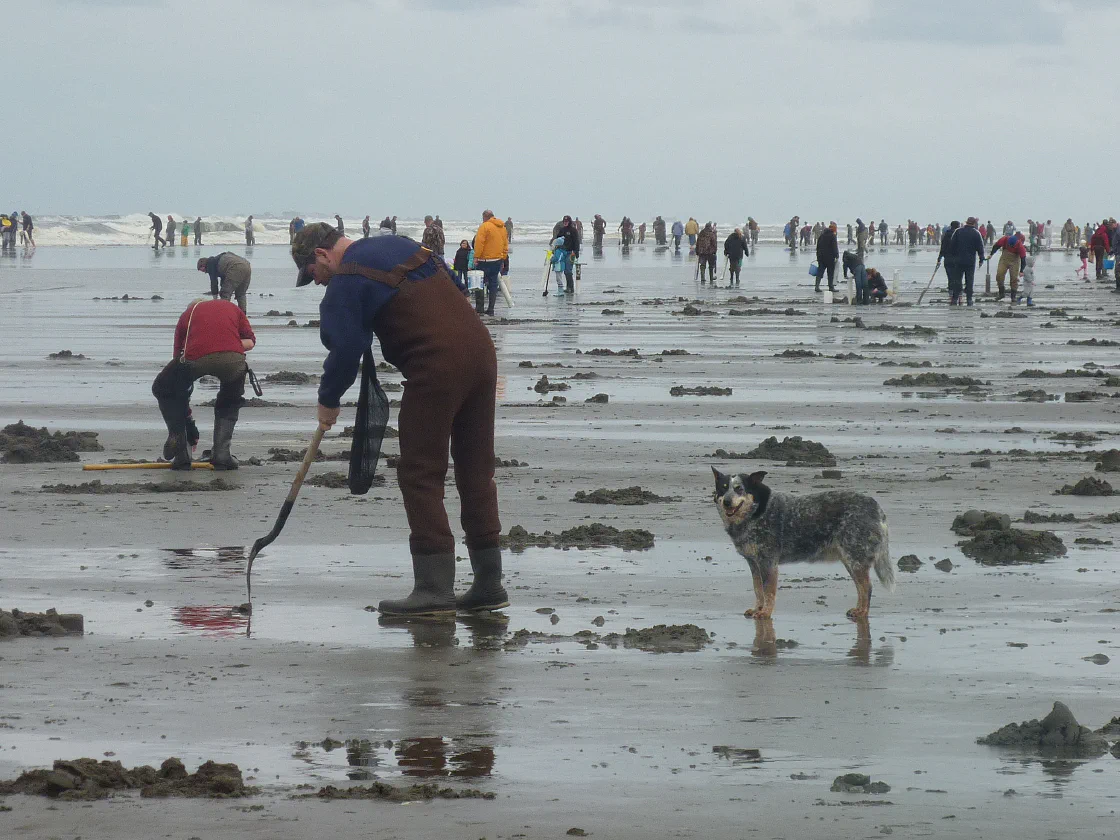
Clamming on the Washington Coast, especially for razor clams, is a cherished Pacific Northwest tradition. It’s a unique blend of outdoor adventure, family fun, and the rewarding experience of harvesting your own fresh seafood. This guide will walk you through everything you need to know for a successful clamming trip in Ocean Shores.
Understanding Razor Clamming
Razor clams are primarily found on intertidal coastal beaches, typically exposed at low tide. The Washington Department of Fish and Wildlife (WDFW) manages five major harvest zones: Long Beach, Twin Harbors, Copalis Beach, Mocrocks, and Kalaloch [1]. While digging is open to all ages, a valid fishing or shellfishing license is required for those 16 and older [1, 2].
Seasonal Information and Regulations
Razor clam seasons are set by the WDFW and depend on clam populations, marine toxin levels, and tidal conditions [1]. Digs usually occur in the fall and winter, sometimes extending into early spring. It’s crucial to check the WDFW website for the latest schedules and any marine biotoxin closures before you go [1].
Daily Limit: The daily limit is 15 clams per person. Each digger must keep their clams in a separate container and must retain the first 15 clams dug, regardless of size or condition [1].
Licensing: A valid 2025-2026 license is required for diggers aged 16 and older. You can purchase licenses online through the WDFW website or from various license vendors across the state. It’s a good idea to get your license before heading to the coast [1, 2].
| License option | Best for |
|---|---|
| Annual razor clam | Visitors planning several digs during the season |
| Short-term razor clam | A single trip or weekend dig |
| Annual shellfish/seaweed | People harvesting more than razor clams |
| Combination license | Anglers and shellfish harvesters who need broader coverage |
License fees and rules can change. Confirm the current license, season, and approved dig dates with WDFW before traveling [1, 2].
Tips for a Successful Dig
- Timing is Everything: The best time for digging is one to two hours before low tide [1].
- Get the Right Gear: A specialized clam gun is often recommended for easier digging, though a clam shovel also works. You’ll also need a bucket or mesh bag for your catch.
- Dress for the Weather: The coast can be wet and cold. Waterproof waders or tall rubber boots, rain gear, and warm layers are a must. Gloves are also a good idea.
- Find the Clams: Look for small indentations or dimples in the sand, known as “shows,” or “ghost shrimp” holes, which can indicate the presence of clams.
- Digging Technique: If you’re using a clam gun, place it over the show and push down with a slight twist. Cover the vent hole to create suction, then pull up the clam and sand. With a shovel, dig quickly around the show to create a hole large enough to reach the clam without breaking its shell.
Cleaning and Preparing Your Clams
After you’ve harvested your clams, it’s time to clean them. Start by rinsing off all the sand. Many people recommend blanching the clams by briefly submerging them in boiling water, followed by an ice bath. This makes the shells open, making it easier to remove the meat. The clam neck, a delicacy, should be cleaned thoroughly. Razor clams are delicious fried, steamed, or in chowders.
Clamming in Ocean Shores
Ocean Shores is a prime spot for razor clamming, with easy access to several popular clamming beaches, including the Ocean Shores, Twin Harbors, and Copalis areas. While there aren’t dedicated clamming tour operators in Ocean Shores, you can find gear at local sporting goods stores. Some accommodations, like the Adrift Hotel + Spa, even offer clamming equipment rentals to their guests.
References
[1] Washington Department of Fish & Wildlife. “Razor clam seasons and beaches.” https://wdfw.wa.gov/fishing/shellfishing-regulations/razor-clams [2] Washington Department of Fish & Wildlife. “Fishing license types and fees.” https://wdfw.wa.gov/licenses/fishing/types-fees